What is the business model of Electrification with Thermal Energy Storage?

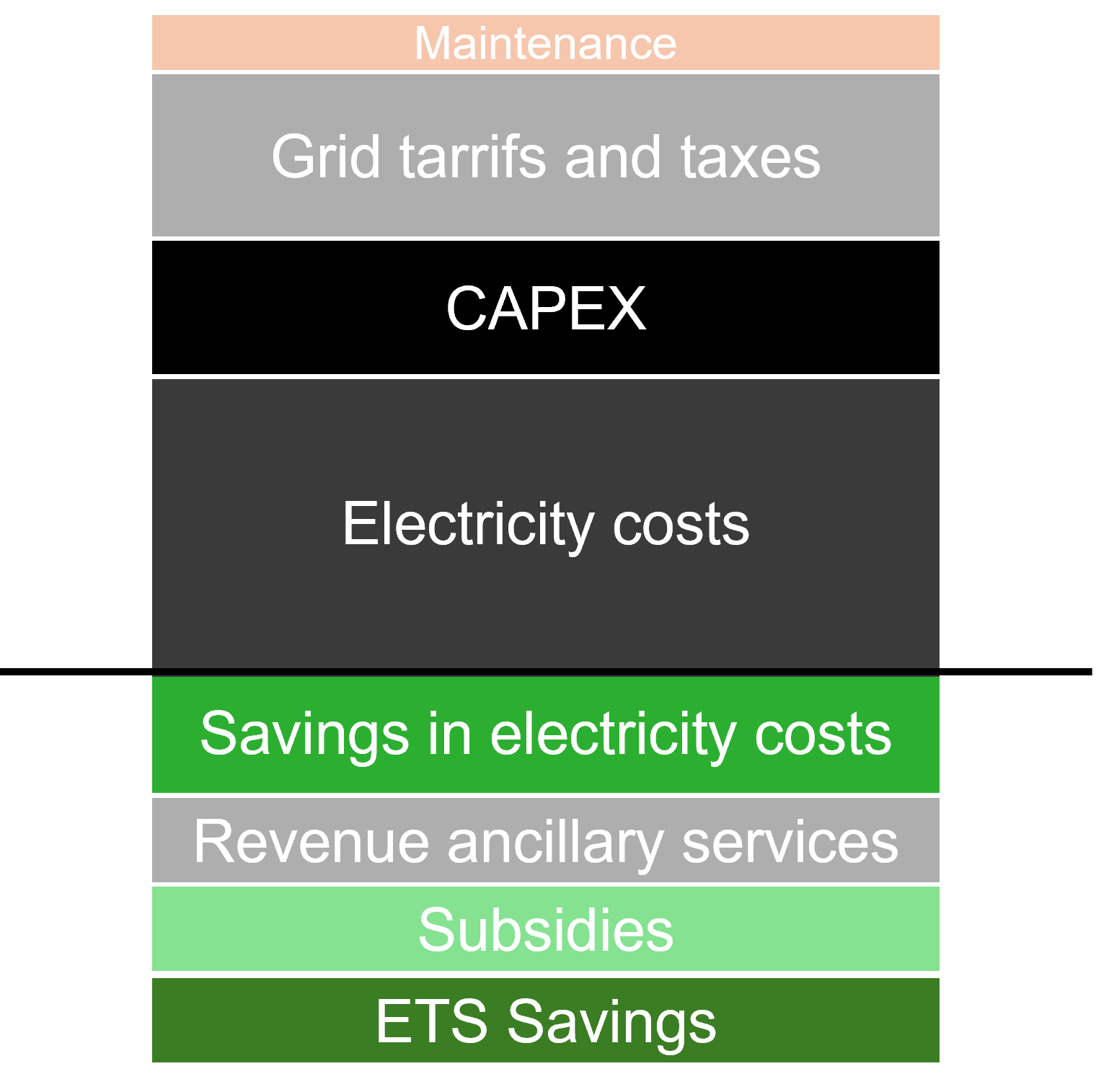
Thermal Energy Storage is a technology that buffers energy from mainly renewable electricity or from the grid for a later use as heat. This way, renewable energy is provided as heat around the clock even when renewable energy is not generated. Renewable electricity is linked to low prices, thus the price for electrification with Kraftblock is very much lower than the average electricity price. Also Kraftblock’s Thermal Energy Storage allows for a large percentage of decarbonisation of industrial processes and thus saves money on allowances for carbon emissions like the ETS.
What are the benefits of Thermal Energy Storage at the Spot market?
The main economic benefit of Kraftblock’s Thermal Energy Storage with Electrification comes however from taking advantage of low electricity prices. Usually a system is operated by using the day-ahead market to scan for the cheapest hours of electricity and then charging the storage with electricity from these hours. This peak shaving allows for large savings in the price of electricity. We put some savings for different countries around the world in our whitepapers for cost benefits and electrification in the food industry.
As Kraftblock charges a multitude of what the process needs, the energy from a small window in the day, can supply the process for more time. This charging ratio is special with Thermal Energy Storage technologies.
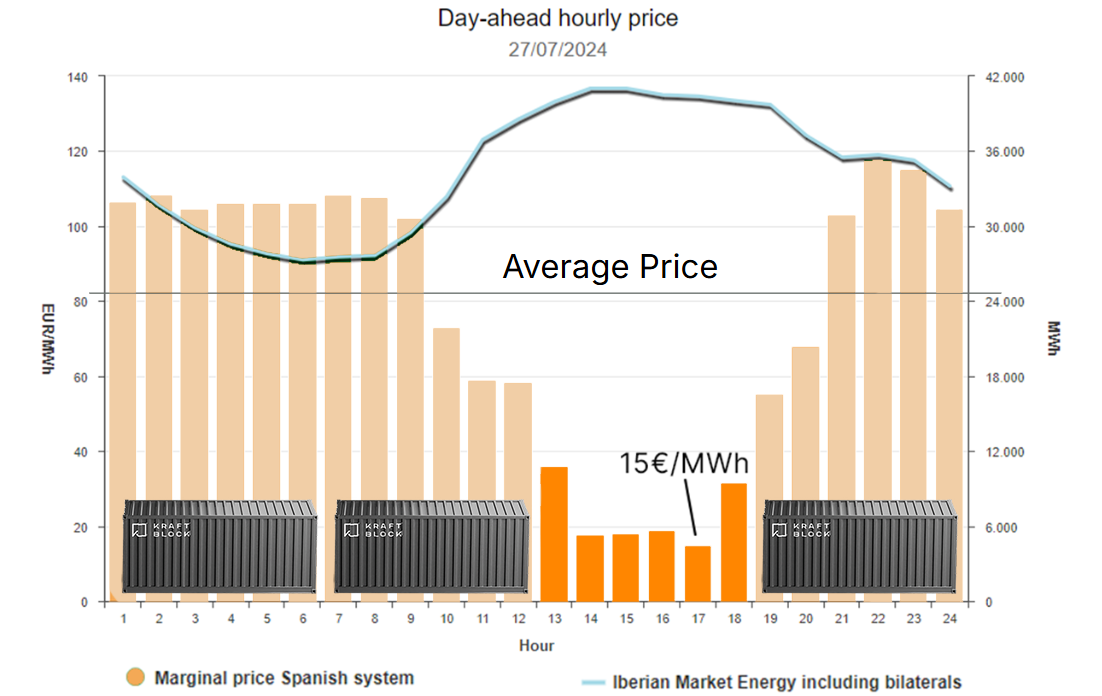
This example shows the scheme: There are 6 hours of low prices on this exemplary day in Spain. During this time the Kraftblock storage is charged by power-to-heat in the amount of energy for the rest of the day and can supply then 18 hours of heat. For a 10 MW process, the system would charge roughly 30 MW per hour to store then 180 MWh and discharge 10 MW after the charging time. Of course there are variable options of operating.
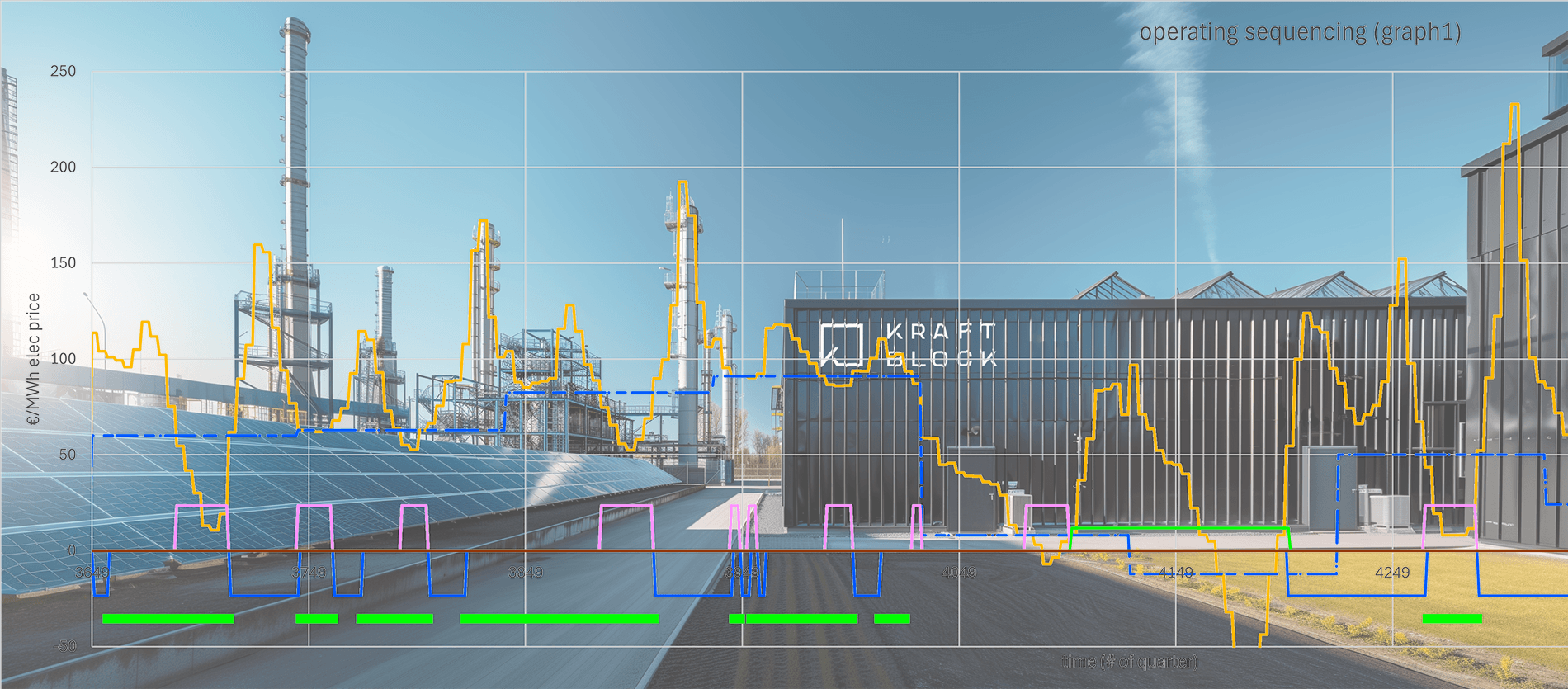
Kraftblock uses a specifically created tool to determine the individual size and general operation of the storage system, that allows to determine the usual charging and discharging hours as well as cost benefits based on historic Spot market data. In the picture below you can see an excerpt of the calculation where each day the best possible price threshold is calculated based on the Day-Ahead market. Underneath that threshold is time where Kraftblock is charged, above it is discharged or the old fossil system is used when there were no favourable prices in a day to charge the storage sufficiently for a coverage of the rest of the day.
.png)
How does Thermal Energy Storage generate revenues offering ancillary services?
In the business tool, diverse sources of costs and revenue can be implemented to calculate and evaluate the best cases based on the data that is being used. One aspect is also the revenue of ancillary or grid services.
Thermal Energy Storage Systems like Kraftblock operate in principle as flexible consumer at the grid. The power-to-heat system is an end user from the perspective of the grid operator, that does not give electricity back to the grid. If Kraftblock is used for industrial process heat, it means that it can be used when the grid needs relief but also is much more flexible when load must be shedded and can stop the demand of electricity while keep up the supply of industrial process heat. This means that the industry becomes flexible without changing their production and just their way of taking electricity for process heat.
This flexibility can be marketed for ancillary services which create revenue for the owner of the Kraftblock system.
If Kraftblock is used in a case where waste heat is electrified, it can bring additional flexibility to give electricity back to the grid and make the thermal power plants of industries flexible which increases the revenue from ancillary services.
How does Thermal Energy Storage save money with renewable Power Purchase Agreements (PPA)?
Like at the Spot market, renewable energy, especially solar PV is less worth the more generation there is in the market. When the sun shines, usually large parts of a country’s PV produce electricity, driving prices negative. A renewable or green Power Purchase Agreements (PPA) allows the generator to sell energy not to a general market but to a consumer directly. Coupling a PPA with a storage gives both parties a benefit: The generator can supply a storage system when they cannot generate revenues money at the market. For this opportunity, the consumer can ask for a much lower price for energy. Both parties win, as the energy does not go to waste, but the consuming industry in Kraftblock’s case provides a benefit to the generator that should result in much lower power prices.
How does Kraftblock’s Thermal Energy Storage improves economics with a private connection?
Having a private connection to a large-scale wind or pv park allows it to take power without paying grid fees, which is a decisive amount in the overall costs of electric energy. The surplus from renewable energy assets, and usually they are a bit oversized to fulfill the demand better, is taken into the storage and used as process heat instead of getting curtailed or sold for less money to the grid. The Kraftblock storage enables flexible use of process heat thus can optimise energy cost by replacing a part of the most costly energy source.