New Kraftblock study: steel industry leaves large amounts of waste heat untapped

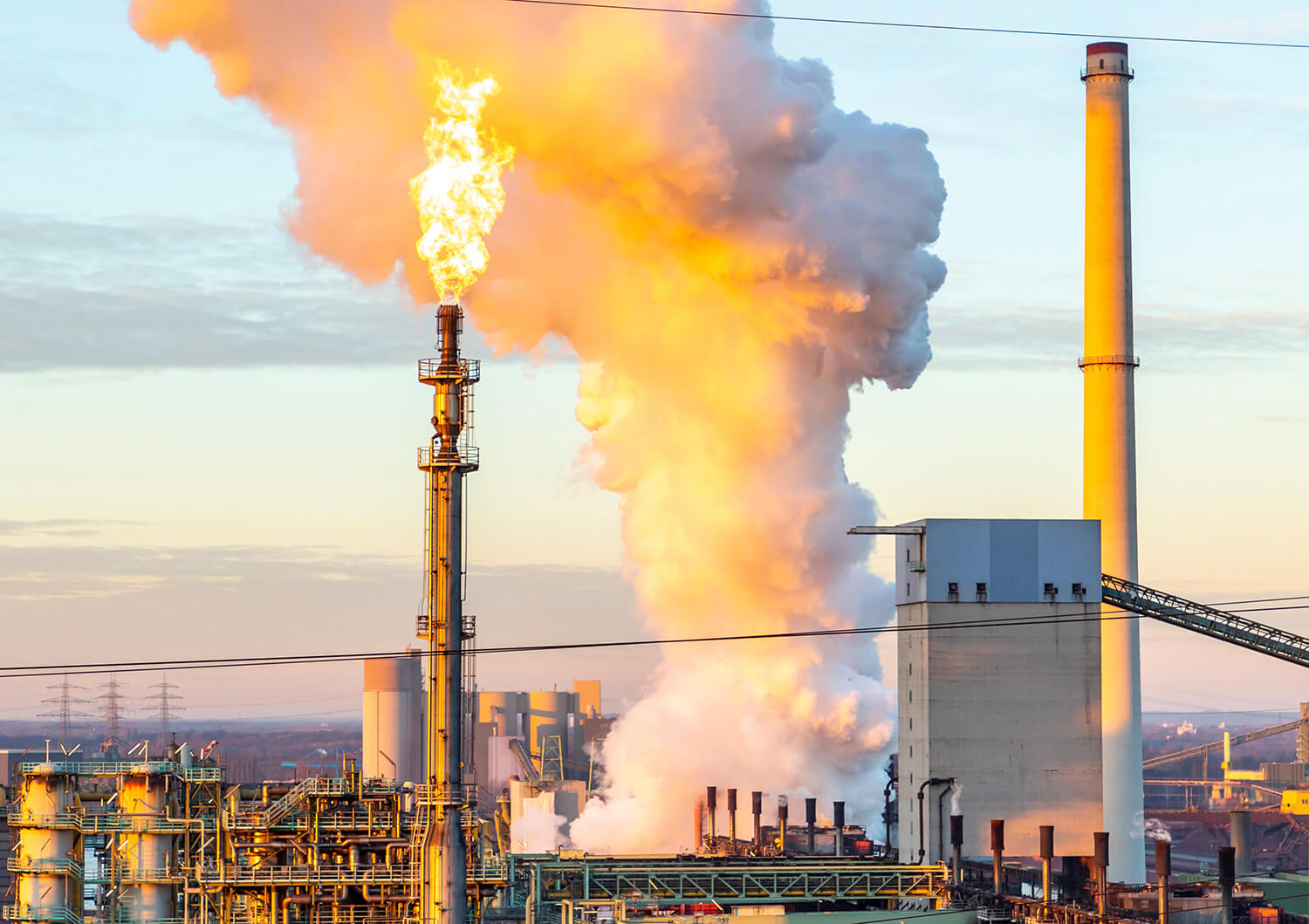
The waste heat lost through flaring alone is worth around €13 million a year at an average European steel plant*. Almost every other key step in steel production also loses energy as waste heat that could be recovered with storage technology available today. These are the findings of a new study by Saarland-based thermal storage manufacturer Kraftblock, produced with the support of the German Energy Agency (dena).
The findings come at a time of mounting cost pressure on the gas market. With the Strait of Hormuz blockaded, the European TTF benchmark price stands of up to €84 per megawatt hour, its highest level since December 2022. At the same time, EU gas storage facilities are only around 70 per cent full ahead of winter, according to Gas Infrastructure Europe.
The study was produced as part of Kraftblock’s participation in the Renewable Energy Solutions Programme (RES Programme). “Alongside the expansion of renewable energy, decarbonising the steel industry above all requires solutions that integrate energy efficiently and flexibly into industrial processes. Thermal energy storage can play an important role here by decoupling energy supply over time and providing process heat on demand. In doing so, it can help bring together energy efficiency, security of supply and competitiveness,” says Thomas Wenzel, Team Lead Future of Energy Supply at the German Energy Agency (dena).
What the study shows
The study examines eight processes, from sinter cooling, flare gases and electric arc furnace off-gases to coke dry quenching, with regard to waste heat recovery and the use of thermal storage. In electric arc furnaces, preheating scrap with waste heat can cut electricity demand by up to 20 per cent. In ladle preheating, a case study at JSW Steel found that 50 to 60 per cent of the heating energy escapes unused through the flue gas. In hot rolling reheating furnaces, flue gas losses account for around 30 per cent of total furnace losses according to a case study at Gerdau Ameristeel (USA), even where heat recovery is already installed.
A reference project with Tata Steel in Jamshedpur, India, shows that the technology pays off at industrial scale. Two storage units with a capacity of 10 megawatt hours each capture waste heat from sinter cooling at up to 600 °C. This saves the equivalent of 120 gigawatt hours of gas and 22,000 tonnes of CO2 per year.
“We are seeing a strong push for energy efficiency in Asia and India to reduce costs and stay competitive. The results of our study show that the European steel industry, too, can already recover large amounts of unused energy today with existing technologies, regardless of how gas prices or regulatory requirements develop,” says Martin Schichtel, founder and CEO of Kraftblock.
Kraftblock is currently building one of the world’s largest commercial high-temperature storage systems to replace natural gas with electricity at a PepsiCo plant in the Netherlands. The company has previously delivered waste heat projects in the ceramics industry and at a combined heat and power plant. The full white paper for the steel industry is available now at https://www.kraftblock.com/whitepaper/thermal-energy-sorage-in-the-steel-industry.
*Own calculation: an average European steel plant flares around 162 gigawatt hours of process gas each year. At a current TTF benchmark price of around €80 per megawatt hour, this corresponds to a value of around €13 million per year (162,000 MWh × €80/MWh ≈ €12.96 million).
This project is funded under the Renewable Energy Solutions Programme of the German Energy Solutions Initiative of the Federal Ministry for Economic Affairs and Energy.
German Energy Agency (dena)
The German Energy Agency (dena) is a centre of excellence for the applied energy transition and climate protection. dena addresses the challenges of a climate-neutral society and supports the German government in achieving its energy and climate policy goals. Since its foundation in 2000, dena has been developing solutions, putting them into practice and bringing together partners from politics, business, science and all parts of society, both nationally and internationally. dena is a project company and a public enterprise owned by the German Federal Government. Its shareholder is the Federal Republic of Germany. www.dena.de
German Energy Solutions Initiative
With the aim of positioning German technologies and expertise worldwide, the German Energy Solutions Initiative of the Federal Ministry for Economic Affairs and Climate Action (BMWK) helps providers of climate-friendly energy solutions access foreign markets. The focus is on renewable energy, energy efficiency, smart grids and storage, as well as technologies such as power-to-gas and fuel cells. Aimed primarily at small and medium-sized enterprises, the initiative supports participants with measures for market preparation, exploration, entry and consolidation. www.german-energy-solutions.de
Renewable Energy Solutions Programme (RES Programme)
Through the RES Programme, the German Energy Solutions Initiative of the Federal Ministry for Economic Affairs and Climate Action (BMWK) helps German companies in the renewable energy and energy efficiency sectors access new markets. Under the programme, reference installations are built in a target market and promoted to the public and to potential customers with the support of the German Energy Agency (dena). Information and training activities support a sustainable market entry and demonstrate the quality of climate-friendly technologies from Germany. https://www.german-energy-solutions.de/GES/Redaktion/DE/Dossiers/res-programm.html